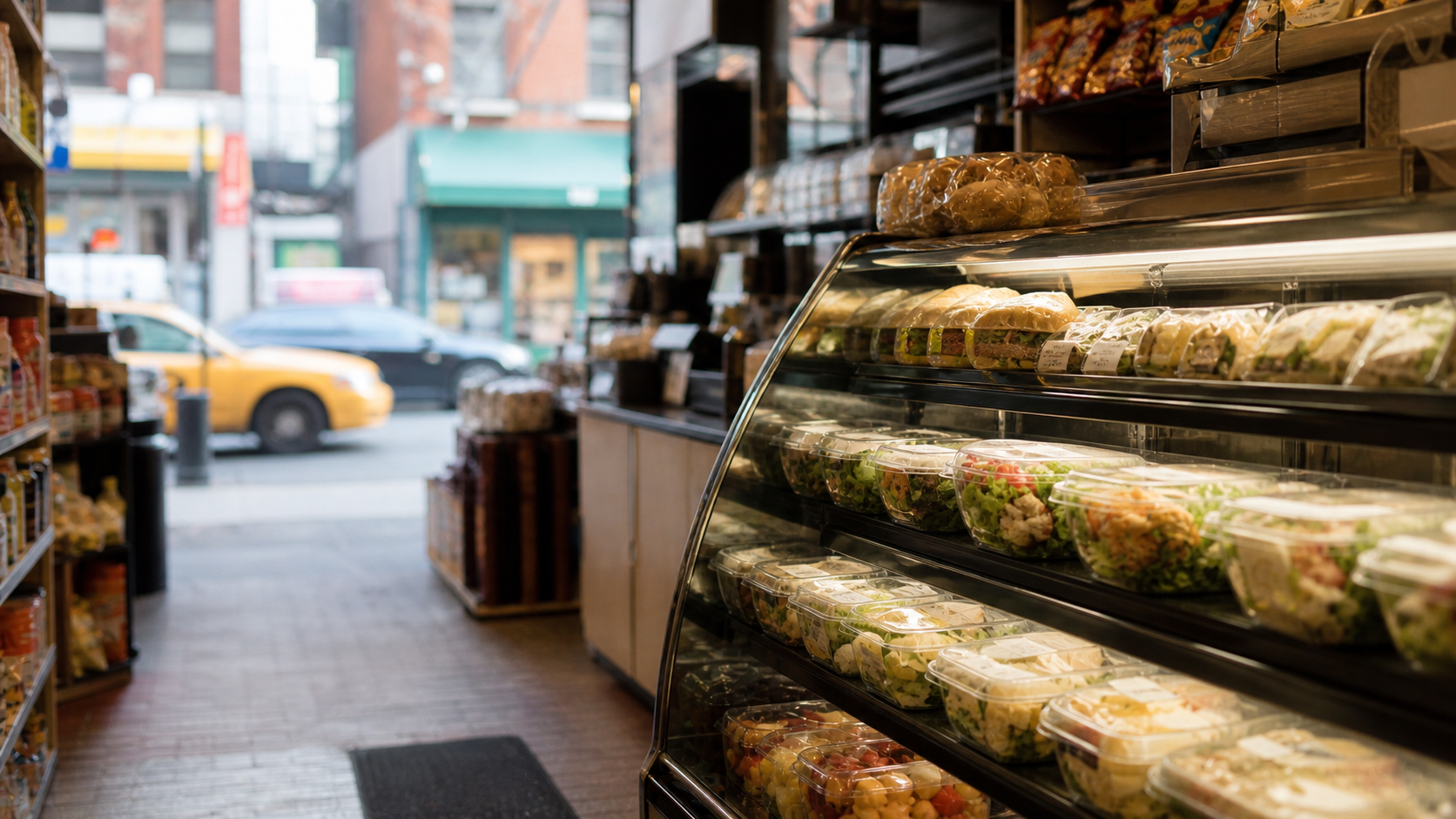
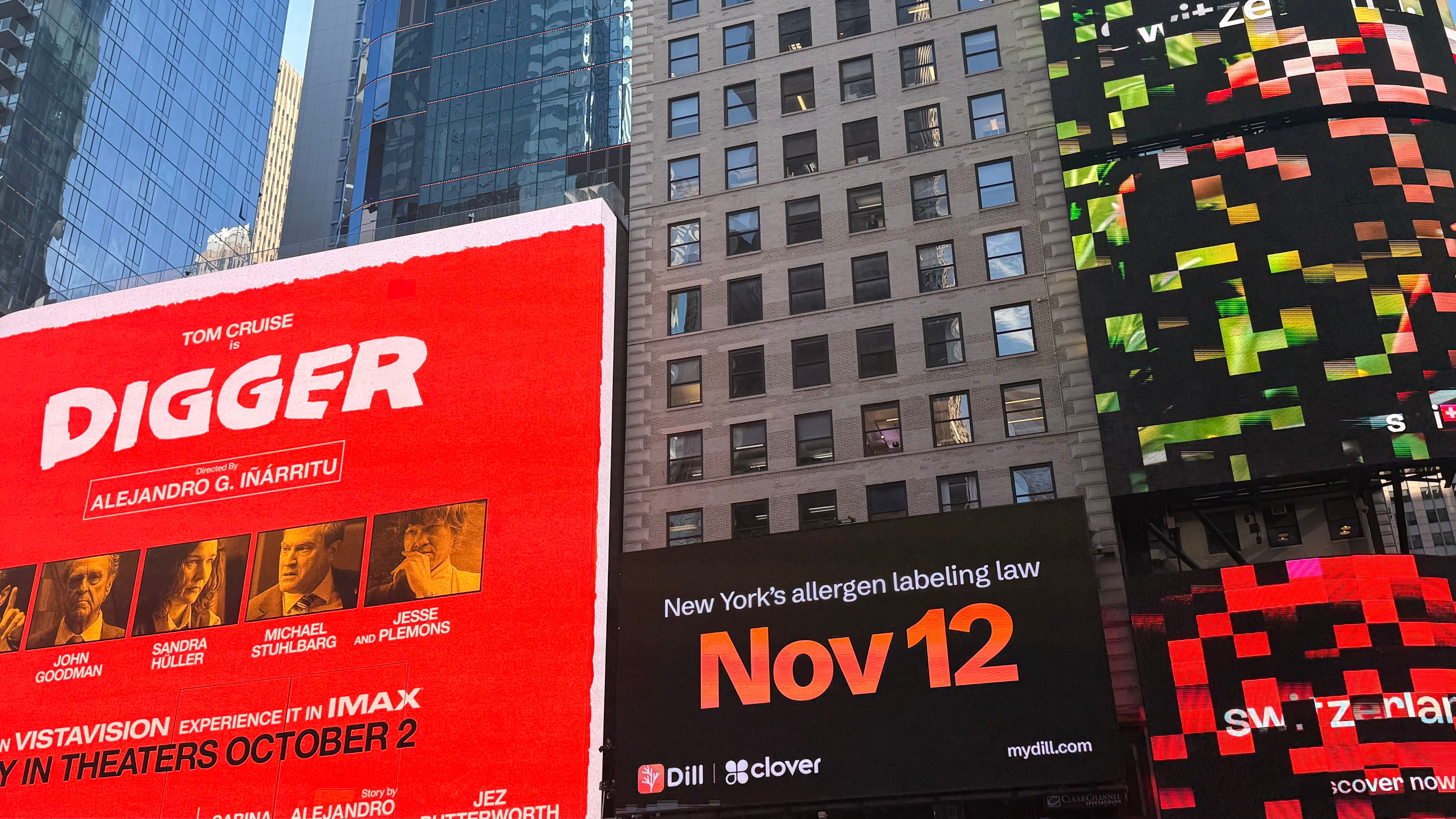
On November 12, 2026, every deli, bakery, sandwich shop, ice cream parlor, cafeteria, food truck and grocery store in New York that packs food ahead of time has to put the allergens on the pack. That is about six weeks from now.
The law itself is short. What takes time is the work behind the label: knowing which products are in scope, knowing what is actually in them, and making sure the label still matches the food after the menu changes. This checklist breaks that into six weeks.
If you want the full legal background first, start with our guide to the New York allergen labeling law. This post is the practical version.
The law in 60 seconds
- What it is: Senate Bill S5381B / Assembly Bill A6558A, signed on November 12, 2025 as Chapter 494 of the Laws of 2025. It adds Public Health Law §1357 and Agriculture and Markets Law §199-g.
- When: it takes effect one year after signing, so November 12, 2026.
- Who: places that prepare food for off-premises consumption, including delis, bakeries, sandwich shops, ice cream parlors, cafeterias and food trucks, plus retail food stores.
- Which food: "prepackaged food", meaning food that is prepared, packed and sold on the same premises. The grab-and-go fridge, the bakery shelf, the pre-made salads by the register.
- What the label must do: name any ingredient that is a major food allergen, in writing, on the package or on a label attached to it.
- Which allergens: the nine US majors. Milk, eggs, fish, crustacean shellfish, tree nuts, wheat, peanuts, soybeans and sesame, plus any ingredient that contains protein from them.
What is in scope, and what is not
Most of the confusion we hear comes down to one question: "does this product count?"
It counts if you made it, packed it and sell it in the same place, before the customer asks for it. A turkey sandwich wrapped at 7am and put in the fridge counts. A tray of cookies bagged in the back and placed on the counter counts. A pint of house-made ice cream in the freezer counts.
It does not count if:
- It is not packaged. Loose pastries in a display case, served into a bag at the counter.
- It is packed after the customer orders. A sandwich made to order and wrapped in front of them.
- It was packed somewhere else. Branded products from a manufacturer are already covered by federal FALCPA labeling rules.
Grey areas to think about now:
- Commissary kitchens. If a central kitchen makes and packs food that ships to your stores, it was not prepared and packed on the same premises as the sale. That food may fall under different rules. Get advice on your specific setup rather than assuming either way.
- Food packed early "for speed." If your lunch rush means you pre-wrap popular made-to-order items at 11:30, those packs are now prepackaged food. The law follows what you do, not what the menu calls it.
What the label has to say
The law asks for less than people expect. You do not need a full ingredient list. You need written notice that identifies the major food allergens in the product.
A minimal compliant label for a sandwich could read:
Turkey & Swiss on Rye
Contains: Wheat, Milk, Egg
A fuller label, which we recommend where you have the data, adds the ingredient list with allergens emphasized:
Turkey & Swiss on Rye
Ingredients: Rye bread (wheat flour, rye flour, water, yeast, salt), roast turkey, Swiss cheese (milk), mayonnaise (soybean oil, egg yolk, vinegar, salt), lettuce, tomato.
Contains: Wheat, Milk, Egg
Two habits worth building from day one:
- Name the specific tree nut, fish or shellfish. Say "almond" or "cod", not just "tree nuts" or "fish". Federal labeling already works this way, and it is what a customer with an allergy needs to know.
- Don't forget sesame. It became the ninth major allergen in 2023 and still gets missed on breads, dressings, hummus and tahini sauces.
The six-week checklist
Week 1 (Sept 28 to Oct 4): list everything you pack ahead
Walk every site. Write down every product that goes into a package before a customer asks for it. Include seasonal items, catering trays and anything that only appears on weekends. These are the ones that get missed.
For each product, note where it is made, who packs it, and where it is sold.
Week 2 (Oct 5 to Oct 11): get the allergen data for every recipe
For each product, list every ingredient, then every sub-ingredient. The allergens hide in the components: the bread, the sauce, the spread, the dressing, the crumb topping.
Ask suppliers for current spec sheets. If a spec sheet is more than a year old, ask again. Supplier reformulations are one of the most common reasons labels go wrong.
Week 3 (Oct 12 to Oct 18): pick your label format and printing setup
Decide whether you will print the allergen line only or a full ingredient list. Then decide how labels get made.
Handwritten labels and pre-printed stickers are the cheapest way to start and the easiest way to get wrong. A handwritten "Contains: milk" depends on the person writing it knowing the recipe that morning.
Printed labels driven from a single recipe database remove that step. The recipe holds the allergens, the label prints from the recipe, and nobody has to remember anything at 6am.
Week 4 (Oct 19 to Oct 25): train the people who pack food
Every person who packs food needs to know three things:
- which products get a label,
- where the label goes and that it must be readable,
- what to do when an ingredient is swapped.
Keep training short and specific to your products. A one-page sheet by the packing station beats a long slide deck.
Week 5 (Oct 26 to Nov 1): build the substitution rule
This is the step most checklists skip. A label that was right when you set it up is not the same as a label that is right today.
Run out of one bread and use another? New supplier for the pesto? Chef tweaks a recipe to hit a margin? Each of those can change the allergens. Write down one rule: no ingredient swap without updating the recipe first. If your labels print from the recipe, updating it fixes the label everywhere at once. If they are handwritten, someone has to catch it at every site.
The UK has lived with a similar law, Natasha's Law, since October 2021. The operators who struggle there now are rarely the ones who don't know the rule. They are the ones whose labels drifted away from the food over time.
Week 6 (Nov 2 to Nov 11): spot-check, then go live
Pull five packed products at random from each site. Compare the label with the recipe and the supplier spec sheets. Fix anything that doesn't match, then do it again the following week.
Keep a simple record: which products are labeled, when recipes were last reviewed, who checked them. It costs nothing to keep and it is the first thing you will want if an inspector or a customer asks.
What is still unclear
We would rather tell you what we don't know than guess.
- Enforcement guidance. As of late September 2026 we have not seen published guidance or FAQs from the New York State Department of Agriculture and Markets or the Department of Health on how the law will be enforced. We will update this post when they publish.
- Penalties. The bill does not set its own fines. Any penalties would come from the agencies' existing enforcement powers, so be wary of anyone quoting specific amounts.
- Changes before launch. New York sometimes passes follow-up amendments to new laws before they take effect. None has been published for this one yet.
Separately, the FDA released the 2026 Food Code on September 17, 2026, which includes clarifications on allergen cross-contact. The Food Code is a model that states adopt on their own timelines, so it doesn't change the November 12 deadline, but it points in the same direction.
How Dill handles it
Dill keeps your recipes and allergens in one place and prints the label from the recipe, on demand, at the packing station. Change the recipe once and every site prints the new label from that moment. It connects to POS systems like Clover and Lightspeed, so products you already sell show up without retyping, and it runs on Brother label printers, with other hardware on request.
Dill already runs food to go allergen labeling under the UK's Natasha's Law, across hundreds of businesses and thousands of sites between them. New York is the same problem with nine allergens instead of fourteen.
If you want to see what your labels would look like before November 12, book a demo and bring a product list.
FAQ
When does the New York allergen labeling law take effect?
November 12, 2026. It was signed on November 12, 2025 as Chapter 494 of the Laws of 2025 and takes effect one year later.
Do restaurants have to label allergens on their menus under this law?
No. It covers food that is prepared, packed and sold on the same premises before the customer orders it. Dine-in menus and food made to order are outside its scope.
Do I need a full ingredient list on the label?
No. The law requires written notice identifying any ingredient that is a major food allergen. A full ingredient list is optional, though it is good practice when you have the data.
Which allergens have to be listed?
The nine major food allergens: milk, eggs, fish, crustacean shellfish, tree nuts, wheat, peanuts, soybeans and sesame, plus any ingredient containing protein derived from them. Highly refined oils are exempt.
Does the law apply to food trucks?
Yes. Food trucks are named in the law, so any food a truck prepares and packs before sale needs an allergen label.
What if I only have one location?
We haven't found a size-based exemption in the text of the law. If you pack food ahead of time and sell it on site, it applies to you whether you run one store or fifty.