A deep dive into the shifting operational landscape from the floor of the NRA Show Chicago 2026.
A few days at McCormick Place during NRA Show Chicago 2026 made one thing clear: the conversation in hospitality technology has shifted.
With more than 55,000 attendees, 2,000 exhibitors, and operators arriving from over 100 countries, the show is a useful read on what the industry is actually prioritising. For four days, the halls become a working test of what holds up in a production environment and what doesn't.
In recent years, the conversation at the show heavily favoured guest-facing technology: kiosks, AI-driven ordering systems, and delivery orchestration tools. This year, the momentum moved toward back-of-house foodservice operations.
Operators aren't looking for more features to sell to customers; they're looking for ways to shore up baseline operations against regulatory pressure, labour friction, and supply chain complexity.
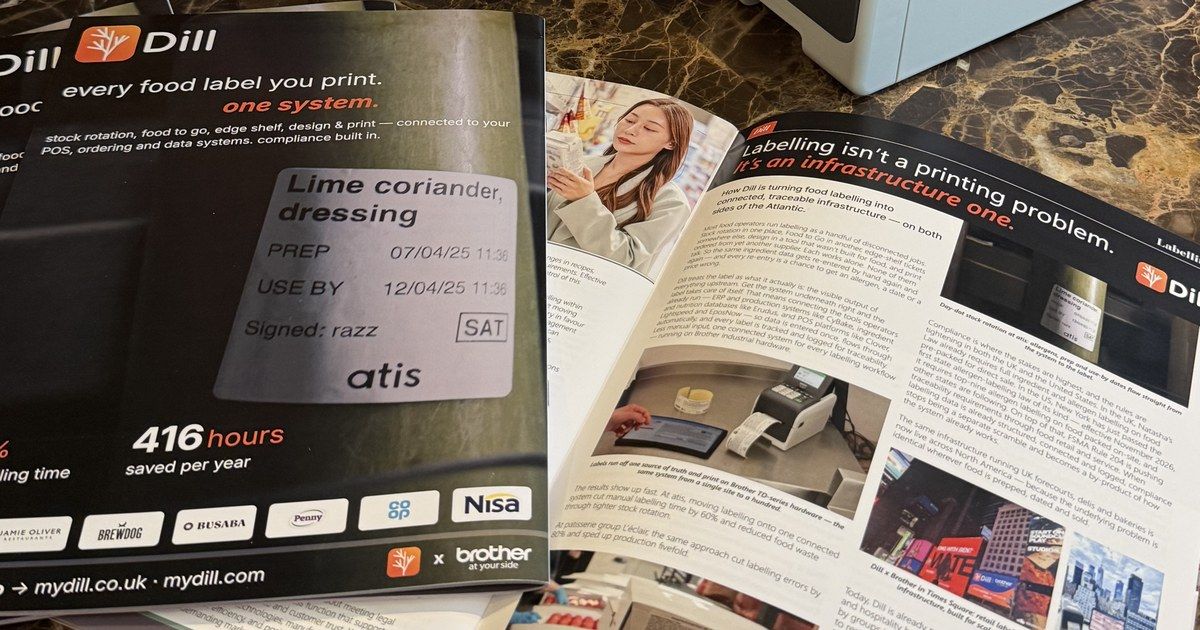
Across those conversations, a consistent theme came through: restaurant labelling is no longer a standalone task handled by a printer in the corner. It's becoming a core piece of operational infrastructure.
What We Learned at NRA: The Shift to Connected Systems
If you spent time talking to multi-unit operators, independent restaurateurs, or food safety directors at the show, you noticed a recurring theme. The primary question wasn't "How do we print a label faster?" It was: "How do we keep our operations consistent across 50 locations without creating more manual work for our teams?"
The core insight from the show: operators want connected systems that turn the data they already have into real-world compliance. The hardware on the line still matters — what's changed is the expectation that it works as part of a connected stack rather than in isolation.
When food labelling software exists in a silo, it introduces operational risk. A line cook manually typing an expiration date or an allergen disclosure into a standalone terminal is a single point of failure. If the recipe updates in the back office but the terminal isn't refreshed, the label is wrong.
At the scale of modern foodservice operations, that friction translates directly into non-compliance, wasted prep time, and safety vulnerabilities.
An infrastructure-focused approach treats the label as the physical endpoint of a wider data pipeline. The information on that label — whether it's for stock rotation, a grab-and-go sandwich, or an in-house prep container — flows automatically from a single source of truth.
Dill Running Live at NRA: The Brother Partnership
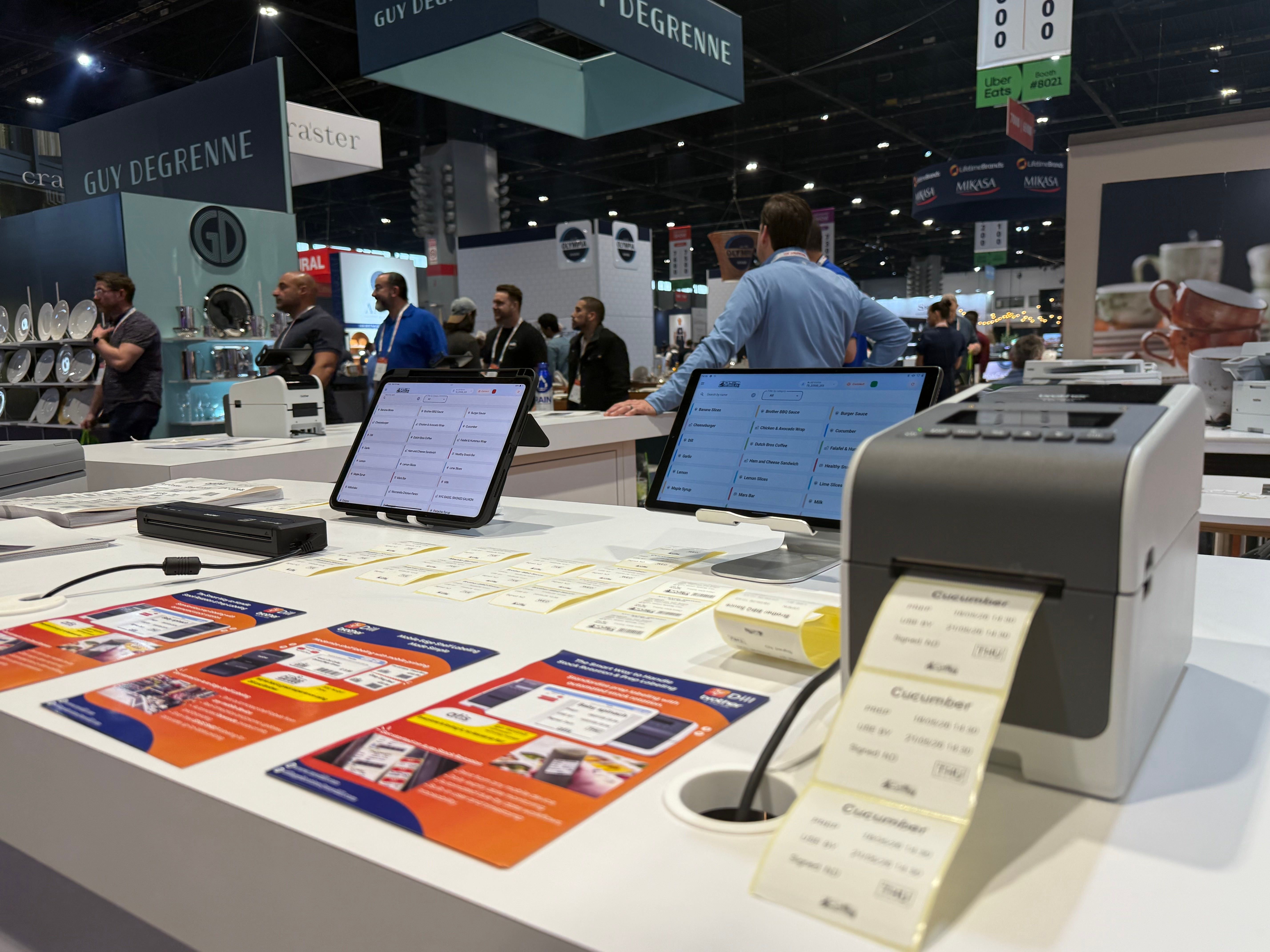
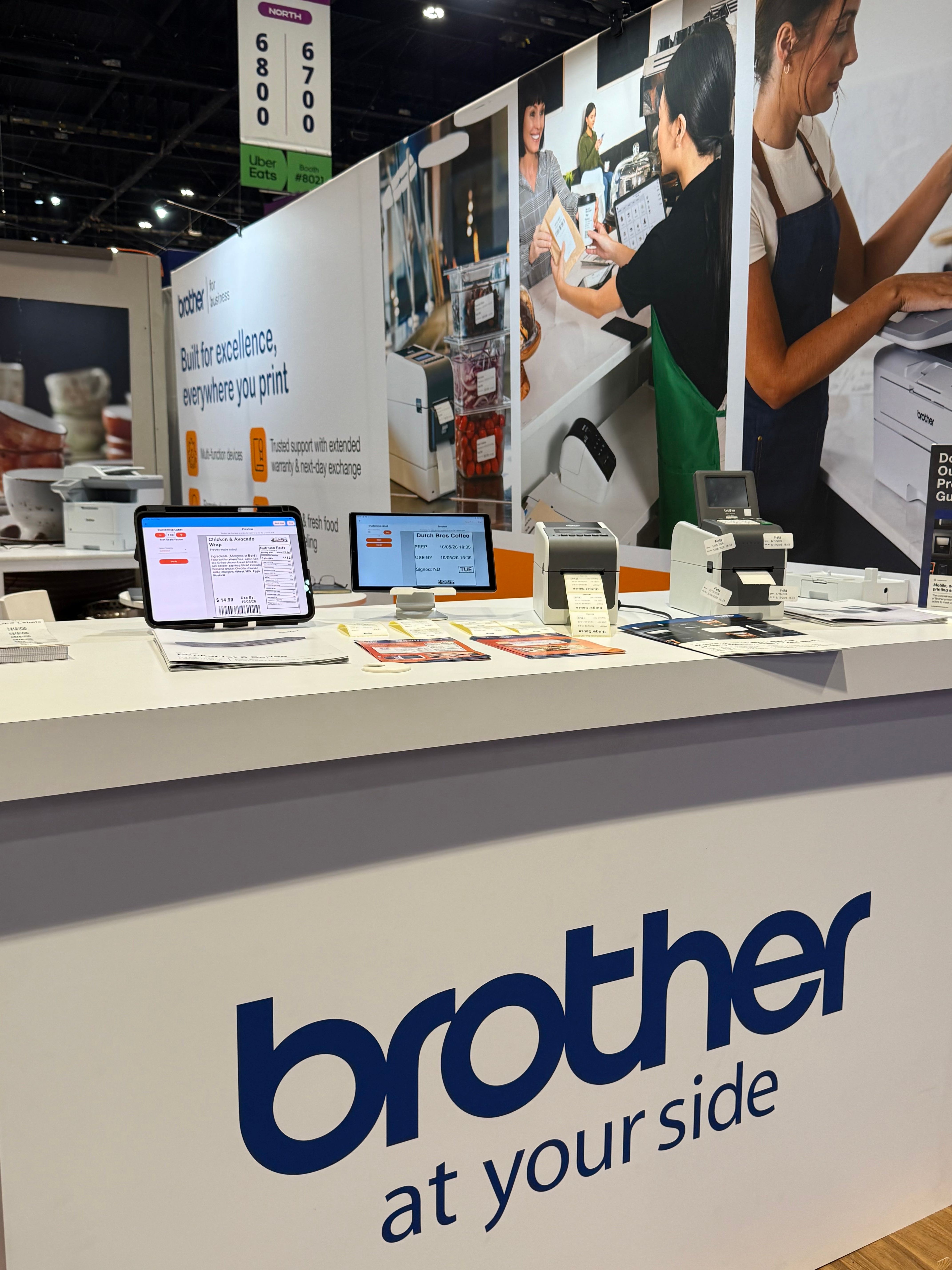
To show what this looks like in practice, the Dill team spent the NRA Show running live workflows alongside our hardware partners at the Brother booth.
Brother is widely recognised across hospitality, logistics, and retail for industrial-grade printing solutions. In high-volume production environments, hardware reliability is non-negotiable — and pairing Brother's hardware with Dill's cloud software gives operators a clear picture of what a connected kitchen looks like end-to-end.
Throughout the event, we ran live demonstrations with the Brother TD-2D printer range across several operational workflows:
- POS-Integrated Workflows: printing branded retail labels as orders come through.
- Mobile Prep Labelling: handheld workflows that let staff label prep items directly at the workstation rather than walking back to a central computer.
- Traceability and Auditability: visibility into what label was printed, when, and by which team member.
Watching the hardware and software work in unison made the point for visiting operators: infrastructure should be frictionless. When a driverless cloud platform is paired with reliable hardware, labelling moves from a daily task that needs attention to a background process that just works.
The Regulatory Squeeze: The NY Allergen Law & PPDS
Compliance was one of the biggest drivers of conversation at the show this year. Operators are looking at a wave of legislative updates that change how ingredients have to be handled and communicated.
Chief among these is the upcoming NY allergen law (A6558/S5381), which takes effect in November 2026.
The law is a significant shift for New York food service establishments, cafes, delis, and bakeries, and likely a preview of broader rollout. It requires any food prepared and prepackaged on-site for immediate consumption (premises-packed foods) to carry a clear, written allergen labelling notification on the package.
A deli sandwich in a clamshell, a muffin in a bakery box, a fresh salad in a grab-and-go cooler — all of these will need explicit allergen disclosures at the point of selection.
The regulation mirrors a similar shift across the Atlantic with PPDS labelling (Prepacked for Direct Sale), known as Natasha's Law in the UK.
Many operators visiting our booth said they aren't yet ready for November. Updating ingredient profiles across multiple locations on older systems is slow and error-prone.
To produce compliant food labels under these frameworks, operators need systems where recipe data automatically flags the top nine allergens, updates across the fleet when a supplier changes, and prints cleanly without manual entry.
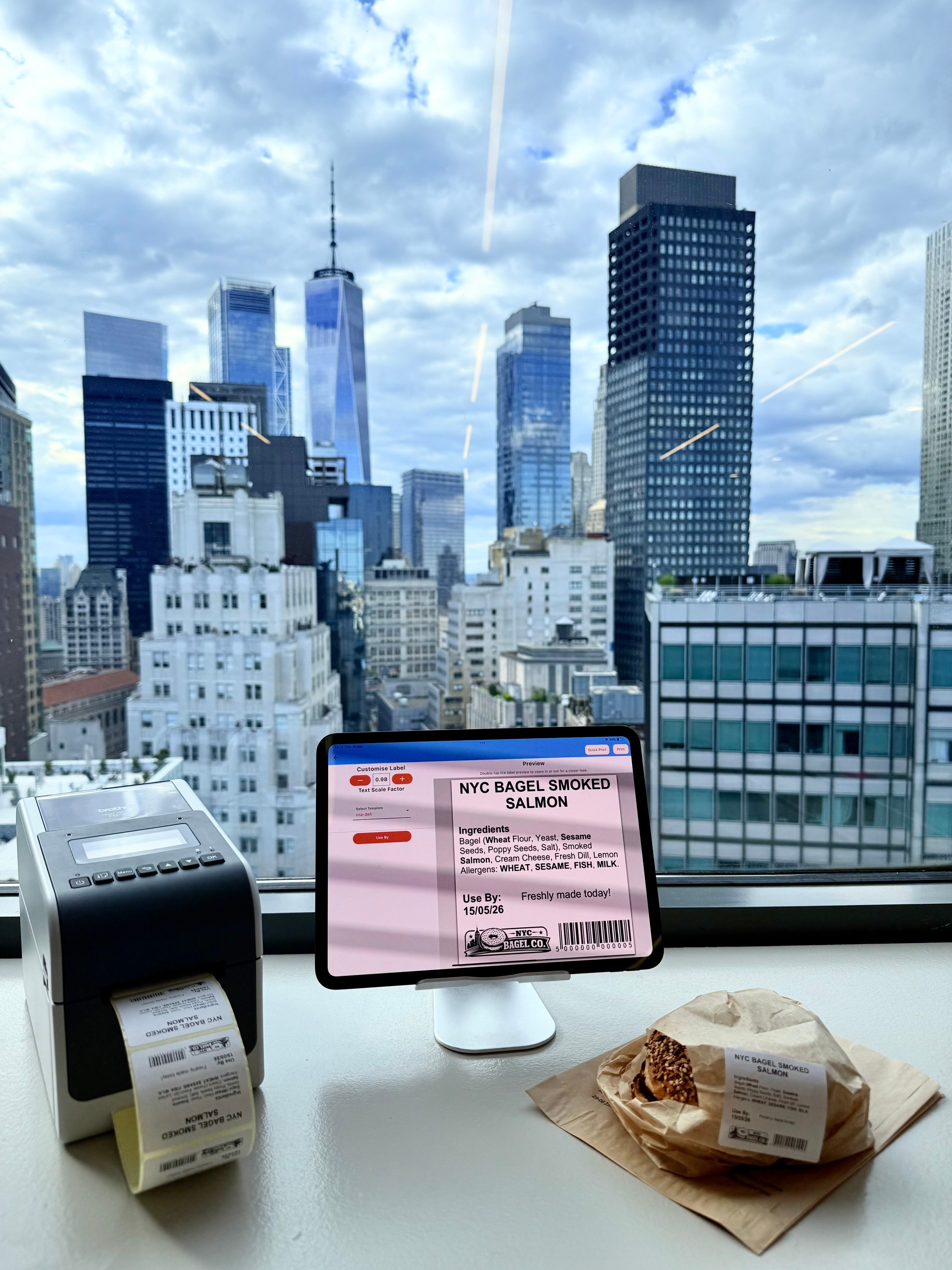
FSMA 204: Making Food Traceability Operationally Practical
Another dominant regulatory topic at NRA Show 2026 was the FDA's FSMA 204 (Food Safety Modernization Act Section 204). While the official enforcement deadline has been adjusted to July 2028, the operational reality is hitting businesses right now.
Major distributors and enterprise restaurant brands are already writing FSMA 204 tracking requirements into supplier contracts for 2026. If you can't track Key Data Elements (KDEs) across Critical Tracking Events (CTEs), you risk falling behind your primary trading partners.
Dill's approach to food traceability is to make these frameworks operationally simple for the team on the line.
When an ingredient moves from receiving to prep, prep labelling is the link in the chain of custody. Dill provides visibility and auditability by logging:
- What item was processed
- The timestamp of the print job
- The user account responsible for the action
Moving this data into a secure cloud log turns what used to be a box-checking exercise into a searchable history. If an inspector or a supply chain partner requests a traceability report, you're not digging through paper binders. The infrastructure handles the tracking automatically.
Unlocking the Stack: POS and Data Pipelines
One of the more encouraging trends at NRA 2026 was that operators are getting smarter about their data stacks. They've realised they don't have a data shortage — they have a data activation problem.
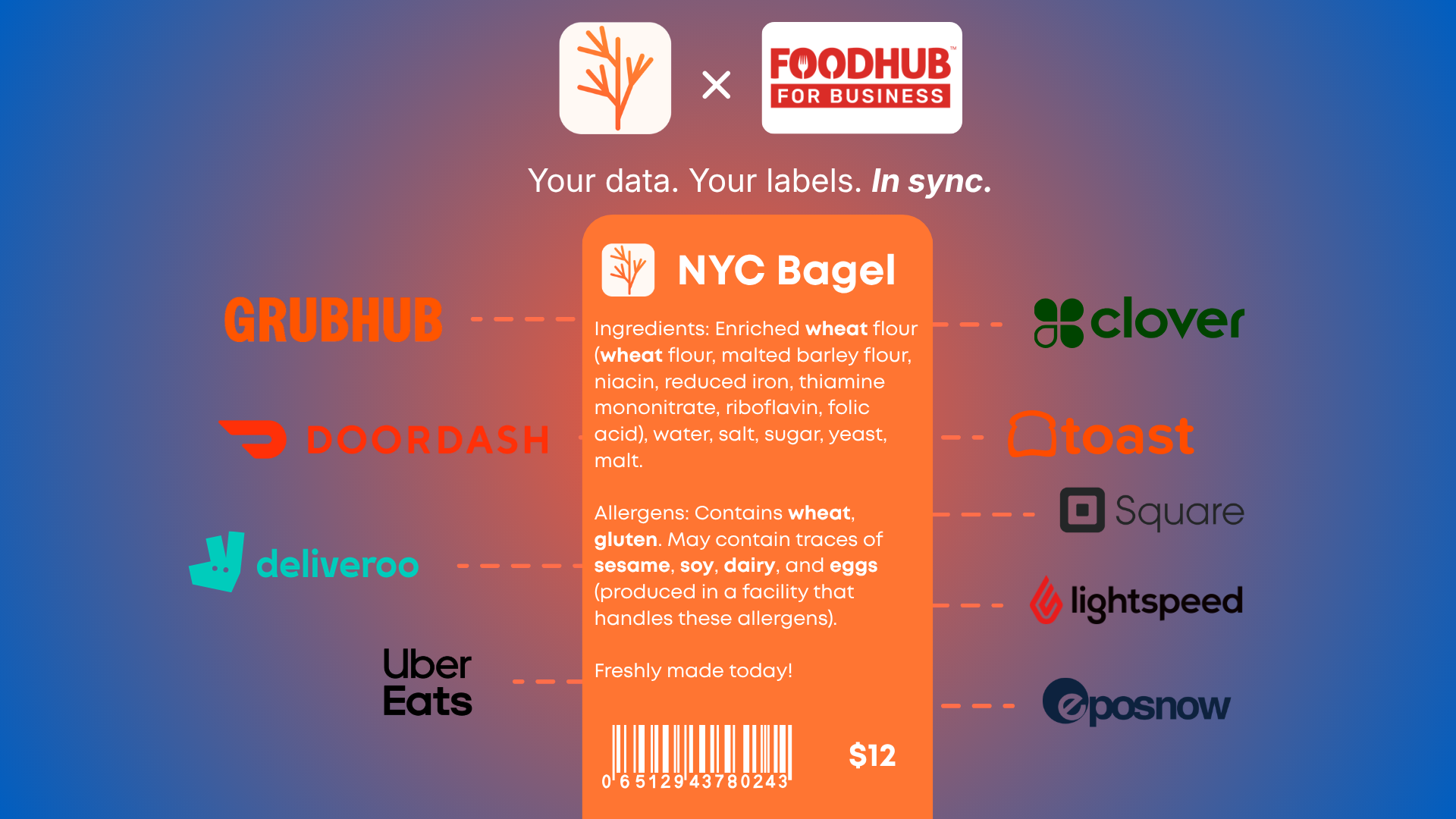
Your Point of Sale (POS) system already contains your item names, pricing, and basic configurations. Platforms like Toast, Clover, Shopify, and Lightspeed hold the daily transactional menu. The friction comes when trying to push that data into a physical format for retail shelves or grab-and-go cases.
Through Dill's integration with PosHub by FoodHub for Business, we're bridging that gap.
Instead of asking managers to manually type item names and ingredient listings into a separate label machine, Dill pulls that information directly from the POS stack via PosHub. The sync produces branded retail labels with up-to-date ingredient data and removes manual data entry from the workflow.
Syncing Enterprise Recipes: The CyBake Integration
For commercial bakeries and food producers operating at scale, the data challenge moves upstream from the POS into Enterprise Resource Planning (ERP) software. This is why our integration with CyBake drew interest from operators at the show.
CyBake handles complex recipe formulations, production scheduling, and inventory management. When a bakery or production facility alters a recipe — swapping a flour supplier or adjusting a batch size — that change has downstream consequences for allergen labelling.
With CyBake ERP recipe data flowing directly into the Dill platform, ingredient lists and allergen profiles sync automatically.
The benefit to foodservice operations is twofold: it removes hundreds of hours of redundant data entry, and it keeps the label consistent with the recipe from the mixing bowl to the final package.
Design Once, Deploy Everywhere: The Modern Label Designer
To round out what a modern approach to labelling looks like, we spent time at the show walking operators through the new Dill Label Designer.
Historically, designing a compliant food label has been a technical chore. It often required desktop software, local printer driver management, and an IT specialist to change a font size or move a logo.
We built the Dill Label Designer around a simple idea: "Imagine Canva, but built for compliant labels."
The platform is a drag-and-drop interface designed for food safety workflows. It builds layouts that adapt to variable text lengths, auto-bolds major allergens, and scales across label sizes.
Because Dill is cloud-native, there are no local installs or machine-specific drivers. You can design a master template at headquarters and deploy it across thousands of mobile and desktop devices in one click. Dill Label Designer is rolling out as a free feature update for all clients.
This is how multi-unit operations protect brand standards while staying compliant at the local level.
Conclusion: Building for the Next Era of Foodservice
The takeaway from NRA Show Chicago 2026 is that the era of treating back-of-house processes as a series of disconnected tasks is drawing to a close.
As compliance laws tighten and operational margins thin, the operators who do well will be the ones who invest in reliable, connected infrastructure — hardware and software working together as a stack.
Food labelling isn't only about stickers and ink. It's about building a dependable data pipeline that protects your customers, automates your workflows, and keeps your operations consistent. If you're still relying on an isolated printer and manual entry, the time to modernise your infrastructure isn't ahead — it's now.
Book a Demo → Read the NY Allergen Law Guide