
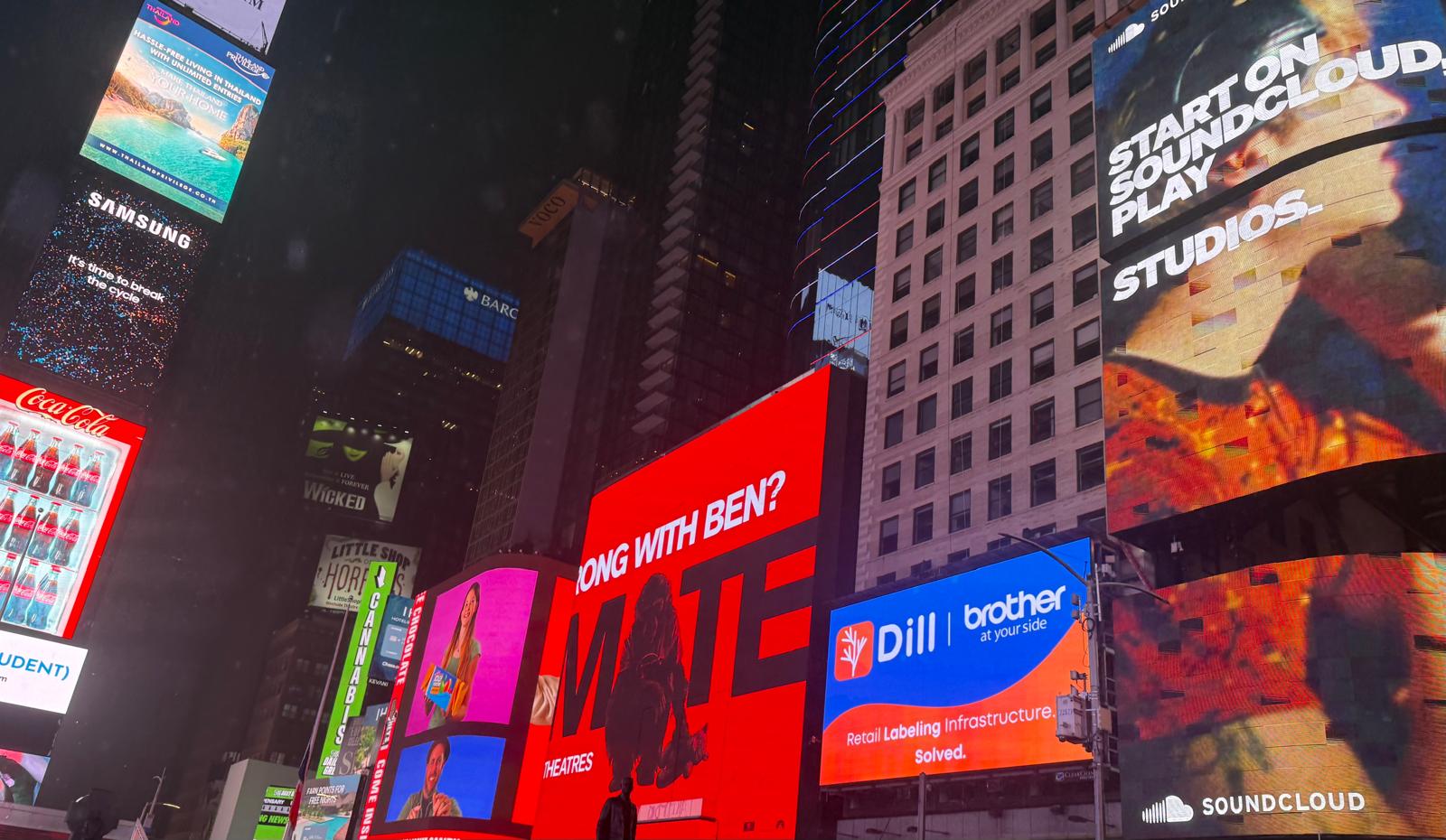
we put dill on a times square billboard. here’s what actually mattered.
by Alex Coldea, founder of Dill
we were in new york for NRF — the big retail trade show — and at some point during the week we spotted our billboard in times square.
dill. in times square. next to samsung and coca-cola.
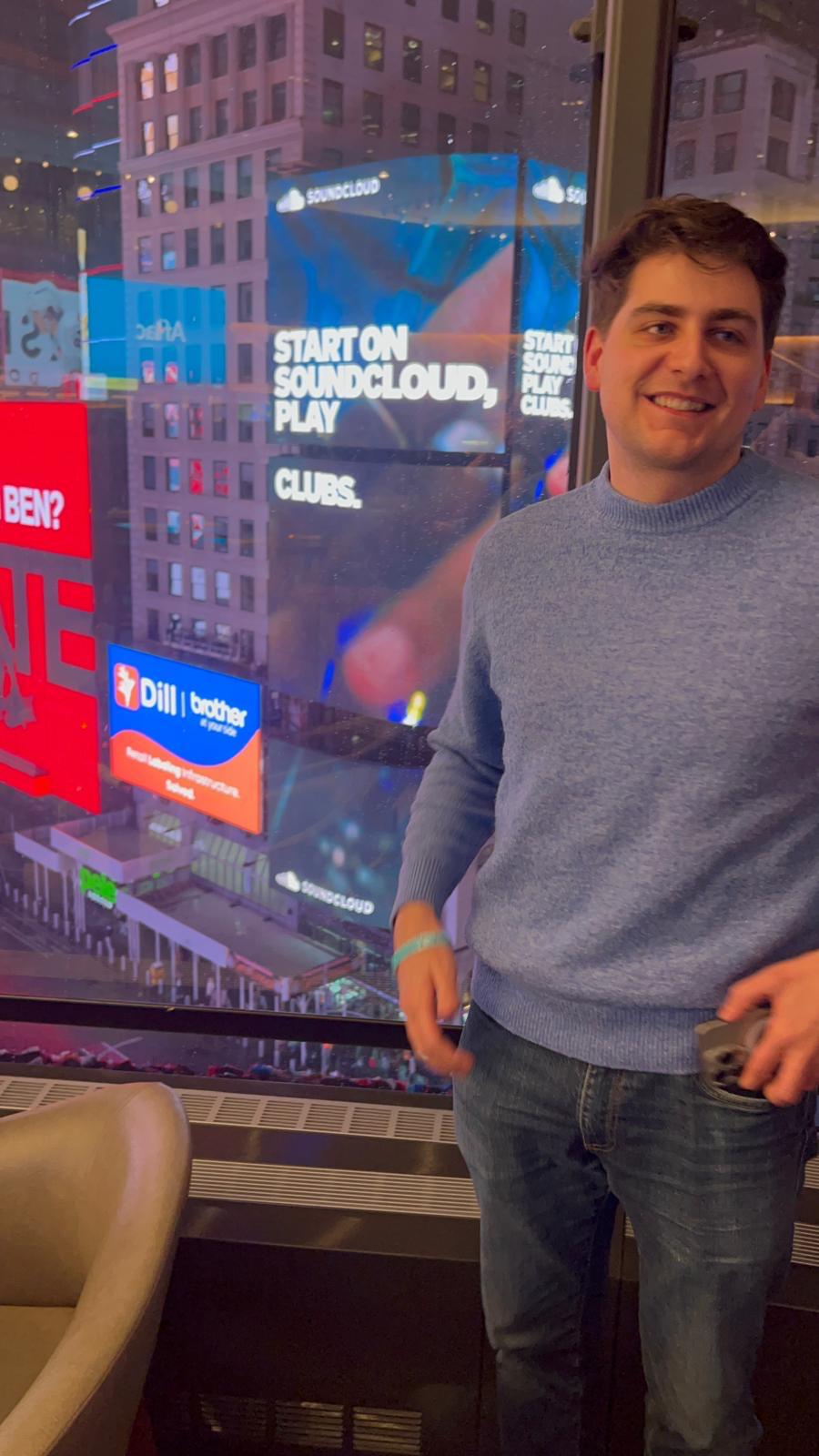
we captured the moment, shared it — it was a cool one.
then we headed straight back to the show floor, where the real conversations were happening.
what NRF actually is
NRF is enormous. something like 40,000 people. every major retailer, every major food brand, hundreds of vendors selling everything from AI checkout systems to loyalty platforms to label printers.
it’s loud. overwhelming, even.
but if you block out the noise and just talk to operators — the people running 30, 80, 200 locations — a pattern emerges pretty fast.
they’re not looking for the next big platform. they’re looking for things that just work.
the problem nobody talks about
here’s what we kept hearing, in different forms:
“we don’t actually know what labels our sites are printing.”
that’s the problem. not the printer. not the label design. the lack of visibility.
a QSR with 50 locations might have different label templates at half of them. some sites still use handwritten labels. others printed something six months ago and nobody updated it when the recipe changed. a new allergen got added to a product. nobody caught it.
there’s no audit trail. there’s no central view. there’s no way to push a change from head office to every site, instantly.
the problem isn’t printing. it’s control.
then the law changed
if you operate food sites in new york city, you already know about the NYC allergen labelling law. we wrote about it in detail separately, but the short version: pre-packaged food sold in retail or grab-and-go now needs proper allergen disclosure on every label.
it sounds manageable. it isn’t, at scale.
when you’re a single-site operator, you update your labels, you’re done. when you’re operating 80 sites across boroughs, each with their own products, their own printers, their own staff — compliance becomes an operational problem, not just a legal one.
and the fines are real. the liability is real.
what we saw at NRF was that NYC was just the most visible example of a trend that’s accelerating everywhere. the EU is moving. states are following. compliance pressure on food labelling is only going one direction.
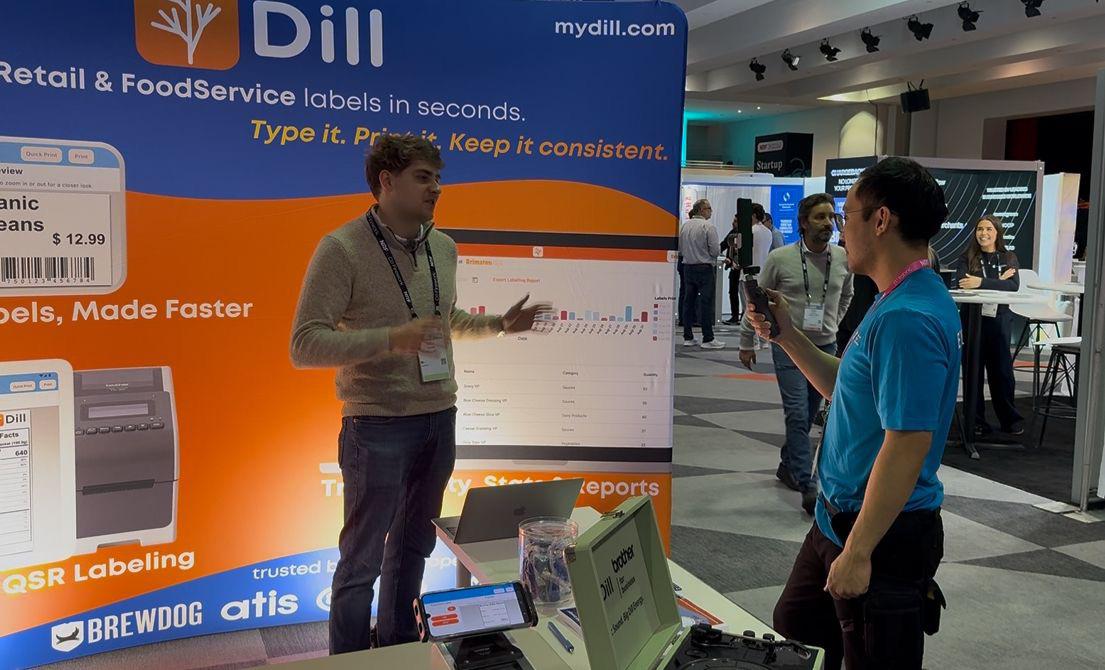
what we showed at the booth
our demo at NRF was deliberately simple.
open the app. find the product. print.
that’s it. no training required. the label comes out with the right information — allergens, date, format — exactly as the head office set it up.
the point wasn’t to impress anyone with features. the point was to show that a store associate who’s never seen the software before can use it correctly, first time.
that matters when you’re rolling out to 50 sites. you can’t train everyone. you need the system to be intuitive enough that correct behaviour is the default.
a few people stopped and said “wait, that’s it?”
yeah. that’s it.
labelling is infrastructure
here’s the framing that feels right to us now:
labelling isn’t a feature. it’s infrastructure.
it’s the same way you don’t think about electricity or wifi until it stops working. most operators don’t think about labelling — until they get a compliance notice, or a customer has a reaction, or head office asks for a report and nobody can produce one.
the reason labelling has stayed invisible for so long is that it mostly worked well enough. local printers, local templates, manual processes. fine for one site.
but the moment you have multiple sites, the cracks appear. different label versions in different locations. no way to push updates. no visibility into what’s actually being printed, right now, at site 47.
what we’re building is the layer that sits between your product data and your printers — cloud to device, consistent across every location, with a full audit trail.
not a printer. not a design tool. infrastructure.
where dill fits
we’re not trying to replace your printer. brother already makes great ones (that’s who we partnered with for the billboard, fittingly enough).
what we do is make the software layer work properly — so that when compliance changes, you push one update and it flows to every site. so that when a manager pulls an audit report, it’s accurate. so that your newest store prints the same label as your flagship.
we work with multi-site operators across QSR, delis, convenience retail and food-to-go. the conversations we had at NRF were largely with exactly those kinds of businesses — companies who’ve outgrown spreadsheets and manual processes but haven’t found a purpose-built solution.
the billboard, revisited
so why times square?
honestly, it was about making food labelling feel like it belongs in that conversation — alongside the bigger retail brands and platforms. because it does.
labelling infrastructure is going to be as foundational to running a compliant food operation as your POS system or your ERP. it’s just that most operators haven’t had to think about it that way yet.
they will.
and when they do, we want to be the obvious choice — the thing that just works, that you don’t have to think about, that keeps every site consistent without requiring a dedicated team to manage it.
that’s the goal. not the billboard.
the billboard was just a nice moment on the way there.
if you’re running multiple food sites and labelling compliance is becoming a headache, we’d love to talk. book a demo →


